70 years ago, a star was born. He revolutionized Hong Kong music and cinema and gathered millions of fans.
Across the globe, in one of the most successful entertainment industries of the last century, Leslie Cheung was born. It was the 12th of September 1956, among the rising buildings of Kowloon, in the – at the time British – territory of Hong Kong.
On the stage of Cantopop
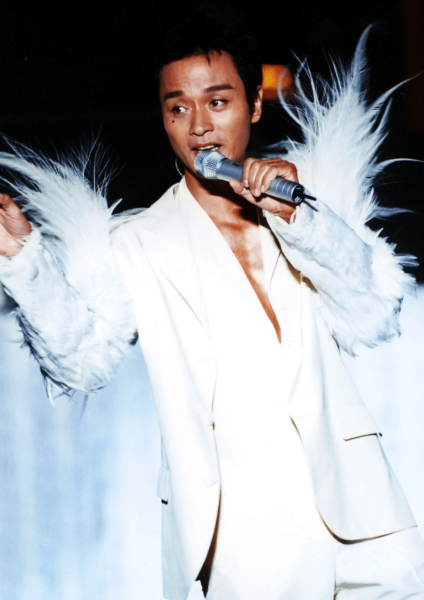
Son of a celebrated tailor in Hong Kong, Leslie Cheung studied in England from the age of twelve before returning to his homeland at nineteen, when he started his career as a singer. He entered the music scene after performing at the Asian Music Contest in 1977, singing “American Pie” and winning second place. He was twenty years old, and from there his career quickly rose. Throughout his life, he published over 40 music albums, including movie soundtracks and live performance recordings. His many loyal fans nicknamed him Ge Ge 哥哥 (older brother), and he is considered one of the leading voices of Cantopop, Cantonese-language music even today. He took a break from singing for many years before returning in 1995 with even larger audiences and sold-out concerts.
Between stage and screen
Music, however, was just one part of his story. Hong Kong at the time had a growing cinema industry, especially in the action genre. In the sixties, it became the most important film hub of East Asia and remained the third-largest film industry in the world in the eighties and nineties. The martial arts movies, combined with wuxia (fantasy) elements, started growing in popularity, with Jackie Chan among the most famous names. In the eighties, film directors such as John Woo and Tsui Hark were the most important creators of Hong Kong cinema. The second wave in the nineties, which encouraged more alternative and experimental movies, brought us the works of Wong Kar-Wai.
Leslie Cheung was present throughout almost the entire evolution. His first big performances were in A Better Tomorrow, directed by John Woo in 1986, and A Chinese Ghost Story, directed by Ching Siu-Tung in 1987. From the nineties, he also started working with Wong Kar-Wai, starring in Days of Being Wild (1990) alongside Maggie Cheung and Andy Lau and in Happy Together (1997) with Tony Leung. He was a very versatile actor, portraying police officers as well as bad boys and ancient Chinese scholars. Performance, in all its facets, was what he excelled at—both on screen and off.
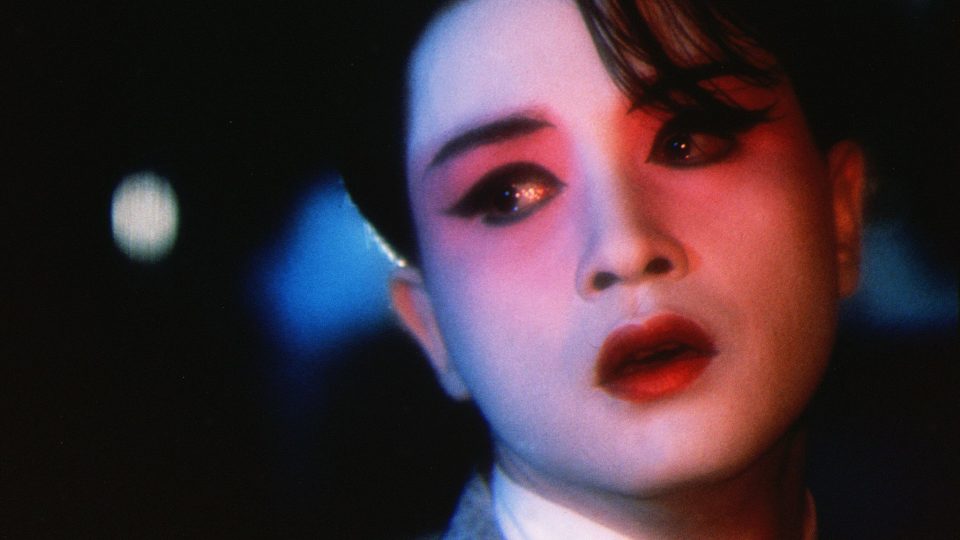
On stage he displayed glittering androgynous fashion style and dazzling performances; on screen he portrayed queer characters that pushed against traditional depictions of gender. His acting performance in Farewell My Concubine (dir. Chen Kaige, 1993) had international success: in the movie he interprets a young Chinese opera singer forced to play female roles who slowly falls in love with his co-star. Set across the turbulent times of 20th-century Beijing, the story challenges gender and sexual norms in a society that still stigmatizes them. Yet his queerness went beyond performance: he came out as bisexual in 1992, becoming the first openly queer singer and media figure in Hong Kong. He is still considered one of the most important queer icons of the city.
The day the music died
Nevertheless, Hong Kong was still a relatively conservative society. After suffering from depression, Leslie took his own life in 2003, at the young age of 46.
In 2013 Universal Music released a greatest hits collection including 3 CDs and a DVD called “Miss You Much, Leslie”. In these troubled times, such longing sentiment still persists. But his spirit and legacy live on: twenty-two years after his passing, people still gather every year to remember him on the days of his birth and death. Leslie, your voice is still singing in misty Hong Kong bars, in CD players across the world, and in our hearts, forever.
Text Valentina Tobler
Foto GQ and BBC