A year ago, I landed in Japan to study at the University of Osaka. What I did not know was that it would turn out to be an experience I would remember for the rest of my life.
As a Master’s student of English Language and Literature at the University of Fribourg, I had limited options to study abroad in an English-speaking country. Though I would have loved to go to the United Kingdom or Australia for my studies, it was simply not possible. For this reason, I decided to use my experience abroad to return to a place that had stayed in my heart since my first visit. In the end, I decided to go to Japan to spend a semester at a new university and to learn how to live so far from home.
Choosing Japan
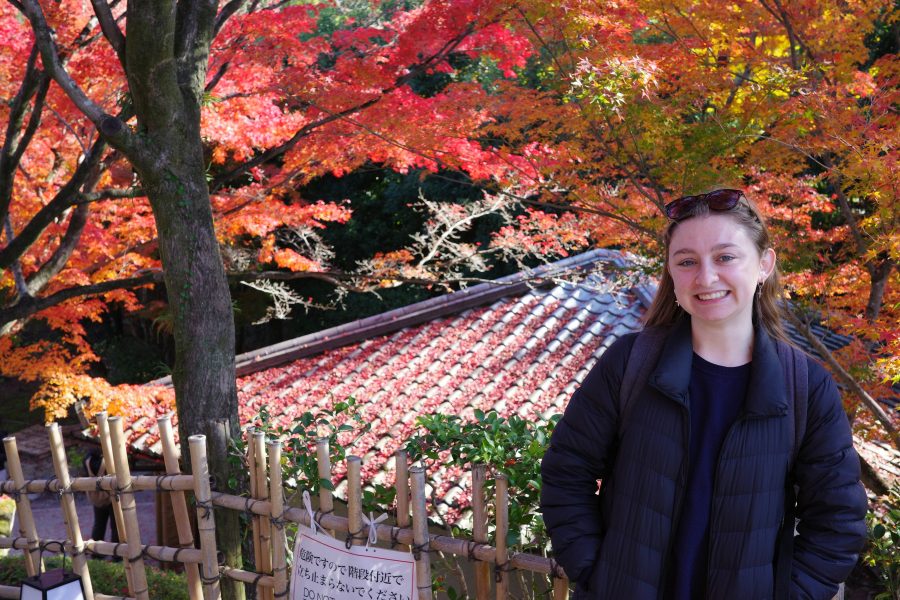
I had already visited Japan in 2023 as a tourist, and it was truly a memorable trip. Back then, I was really impressed by the country’s traditions, its landscapes, language and food: after boarding the plane on the way back, I remember promising myself I would return soon. At the time, however, I did not imagine how soon it would be.
Studying abroad for a semester has always been something I have wanted to do. When the time to choose where to go finally came, I settled on Japan: the idea of spending a semester there seemed the perfect choice for me, and since I had already been there before, that made the thought of staying there for longer less stressful. Besides, I really wanted to know more about Japanese culture and learn the language. As for the city, I chose Osaka because it is located in the Kansai region, not far from cities like Kyoto and Kobe and many other sightseeing spots, giving me the possibility to visit different areas during my stay.
In order to get accepted, there were many steps I had to take. There were two applications, one for the University of Fribourg and the other for Osaka, but the range of documents to prepare was similar. The biggest issues were with my visa, which was complicated to get and involved lots of people, ending up being a process of two months. But everything went well, and in the end, I was accepted to the University of Osaka from September 2025 to February 2026.
At the University of Osaka
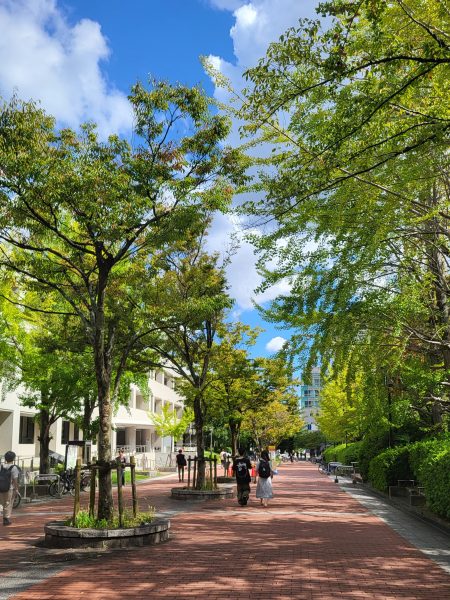
Without being able to speak Japanese, the range of classes at the University of Osaka that I could take was limited to the few English-taught courses. But even so, it was still possible to spend a semester studying there. I took some courses for my English studies: for example, a literature course on Jane Austen’s novel Mansfield Park. I also took a course on second language teaching pedagogy, and it was interesting to share with classmates how English is taught in our home countries.
Due to visa-related regulations, I had to take a minimum of seven classes per week in Japan, so I ended up attending classes I did not need for my degree. I was delighted I could attend a class on Japanese modern and contemporary literature. I also joined a philosophy and literature lecture on the German Enlightenment, which was interesting to study with students with different cultural and educational backgrounds. At the university, I also took three weekly Japanese language classes: even though I had already studied some Japanese by myself before getting there, I finally had the opportunity to study it seriously, and I was able to improve my language proficiency.
Whether I could attend a class or not was decided by a lottery system, which resulted in me having to give up on courses I wanted to take. Nonetheless, I think that the timetable I received a few days before the beginning of the semester was perfect; the classes were interesting, and overall, I had a great time at the University of Osaka. Last but not least, most of the students at the university were Japanese, which helped fully immerse myself in the language and culture.
«I still think about my time in Japan. Sometimes it does not even feel real.»
My everyday life in Japan
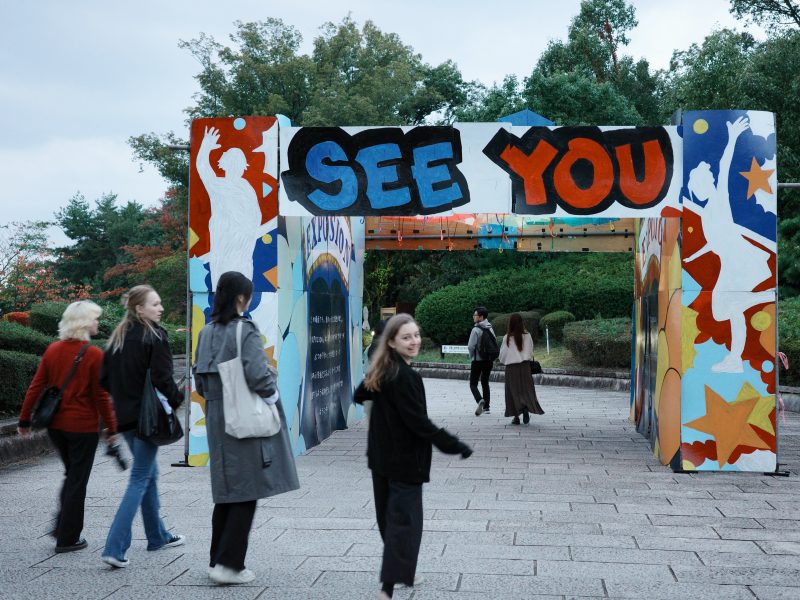
The campus where all of my classes took place was located in Toyonaka, north of Osaka, and I lived about ten minutes away, in a sharehouse with other female students of various nationalities. Considering that I took classes in English specifically aimed at international students, I mainly had contact with students from all over the world: some of them have become dear friends with whom I am still in touch. With them, I not only studied together, but also spent time outside of class, especially exploring the various restaurants in the area (and trying some of the best dishes I have ever eaten!), or visiting nearby spots, such as the temples in Uji and the mountains around Kyoto. I took the opportunity to try living a daily life that is somewhat different from what I am used to: using the facilities on campus such as the convenience store, the post office and the cafeteria that served Japanese food, visiting izakayas (traditional Japanese bars), going to karaoke, and taking advantage of the fact that eating out is much cheaper than in Switzerland. In addition, I joined some of the activities offered by the university, such as attending a cooking class where we made gyoza, visiting Himeji Castle with the students from my exchange program, and spending three days at Machikane, the university festival.
Osaka is one of the biggest cities in Japan and, therefore, it offers a lot to see and to do. The city has a friendlier and relaxed atmosphere than other Japanese towns. But what really stuck with me about the city is its hospitality and the way the people were always kind and helpful. With a basic knowledge of Japanese (and the help of translation apps), I managed to have some truly valuable conversations and make meaningful connections.
Similarities and differences between cultures
I’m not sure I can accurately describe what differentiates the Swiss from the Japanese ways of living, since I spent time and attended lectures with my friends who were mostly foreigners. However, it was always interesting to discuss cultural differences with our Japanese friends. As far as university is concerned, I noticed that everything was very similar to what I am used to, from the structure of the lectures to the assessment methods. I also felt really safe, which is why living there was enjoyable. I did not have particular difficulties settling in, and I feel that, as a Swiss person, living in Japan was not particularly challenging or fundamentally different; however, it is important to note that I lived there for a short period with the support of the university, and that the situation might be different if I were to live in Japan for a longer period and under different circumstances.
This was my first experience of living abroad and, although it was challenging (especially due to the language barrier), it was a truly rewarding experience.
To prospective exchange students
Although doing a semester abroad has always been a dream of mine, I was not sure whether it was a good idea until the very end. And yet, it ended up being one of the best experiences of my life! I would recommend going to Osaka for an exchange because it is a city full of things to do and amazing food to try, and it is perfect for people who want to visit Japan, since it is conveniently situated in the centre of the country. The linguistic barrier can be a bit bothersome sometimes, which is something to keep in mind, but if someone is open to learning, the experience can be even more rewarding. If not Japan, I would still advise every student to do a semester abroad. It is a long procedure, and I recommend starting early in order to collect all the necessary information and documents, but once everything is set, the time abroad is going to be unforgettable.
Text and Photos Francesca Tobler